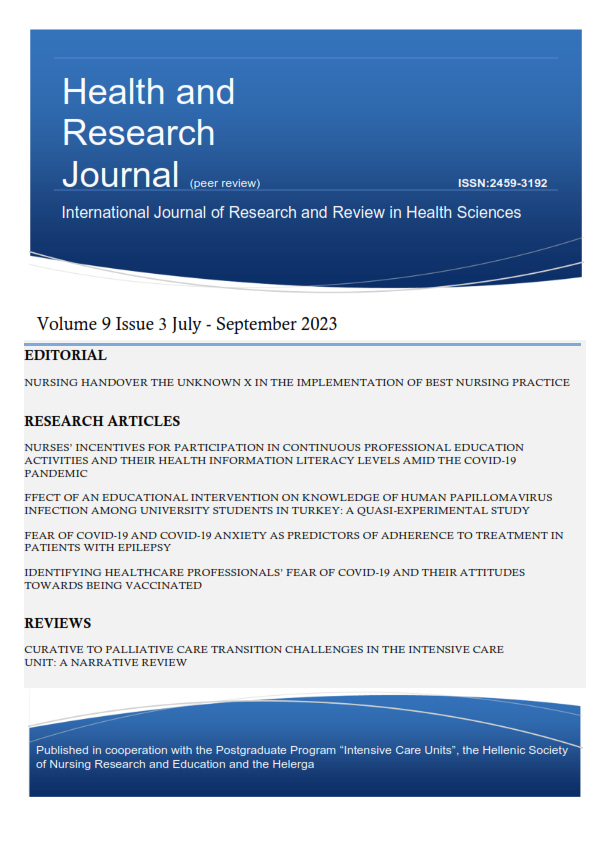
Effect of an educational intervention on knowledge of human papillomavirus infection among university students in Turkey: A quasi-experimental study
Abstract
Aim: This study aimed to determine the knowledge level of university students outside the health field on human papillomavirus (HPV) infection and evaluate the efficacy of educational interventions provided on HPV infection.
Method and Material: This was a quasi-experimental pre-test and post-test design. This study was conducted on undergraduate students outside the health field at a public university in Izmir. HPV education was provided to the students in classes with a PowerPoint presentation, and the “Fall in Love, Not in HPV” brochure was distributed.
Results: Of 873 students participating in the pretest, 48.7% and 42.5% heard of HPV infection and vaccine, respectively. While the response rates of the students participating in the pretest of the 16-question HPV knowledge survey ranged from 13.9% to 58.8%, a significant (51.4%–91.6%) increase was observed in the percentage of answers to the posttest HPV questions after the educational intervention (p < 0.001). The total HPV knowledge score was 5.17±4.33in the pre-test, and the post-test was 13.37±2.66 (p<0.001). The biggest barriers to those who did not want to be vaccinated were the cost of the vaccine and the lack of information about HPV infection.
Conclusion: The educational intervention has greatly increased the knowledge of HPV infection among university students. Continuing education programs are needed to bridge the knowledge gap on HPV infection and HPV-related diseases among young adults.
Article Details
- How to Cite
-
Dasikan, Z., Ünsal Atan, Şenay, Erdoğan, M., Kıratlı, D., Yeyğel, Çiler, & Elmas, S. (2023). Effect of an educational intervention on knowledge of human papillomavirus infection among university students in Turkey: A quasi-experimental study . Health & Research Journal, 9(3), 131–142. https://doi.org/10.12681/healthresj.34062
- Section
- Original Articles
Copyright notice:
Authors retain copyright of their work and grant the Health and Research Journal the right of first publication.
License:
Articles are published under the Creative Commons Attribution 4.0 International License (CC BY 4.0). This license permits use, sharing, adaptation, distribution, and reproduction in any medium or format, including for commercial purposes, provided that appropriate credit is given to the author(s) and the original publication in this journal, a link to the license is provided, and any changes are indicated.
Attribution requirement:
Any reuse must include the article citation and DOI (where available), and indicate if changes were made.