Το Αρχείο Νίκου Εγγονόπουλου: από την ιδιωτική συλλογή στη δημόσια δημιουργικότητα
Περίληψη
Elisavet Arseniou, Charalampos Otampasis, Panagiotis Felekis
Nikos Engonopoulos Archive: from private collection to public creativity
This study illustrates the Nikos Engonopoulos Archive as a complex literary and artistic document and as a case study for contemporary archival and digital practices in the humanities. It focuses on the nature, structure, and interpretive possibilities of the archive, highlighting its hybrid character, where words and images coexist organically. The study approaches archival processing not as a neutral technical process, but as a scientific, cultural, and pedagogical practice that influences the way the creator's work is received and interpreted.
Particular, emphasis is placed on the process of classifying, documenting, and digitizing the archive, which is examined as an infrastructure in progress rather than a complete digital repository. In this context, the possibilities created for new literary, generative, and interdisciplinary approaches are analyzed, as well as the limitations arising from issues of access, copyright, and institutional management. At the same time, the study explores pilot forms of educational and creative use of archival material, treating them as indicative practices rather than established results.
Finally, the archive is approached as an ethical and aesthetic space, in which memory, historicity, and digital representation jointly shape new conditions for interpretation and cultural reflection. The study argues that the Nikos Engonopoulos Archive constitutes a dynamic field of knowledge, whose importance is expected to be enhanced through continuous scientific processing and methodical exploitation.
Λέξεις Κλειδιά: Nikos Engonopoulos, archive, art, literature, cultural heritage
Λεπτομέρειες άρθρου
- Πώς να δημιουργήσετε Αναφορές
-
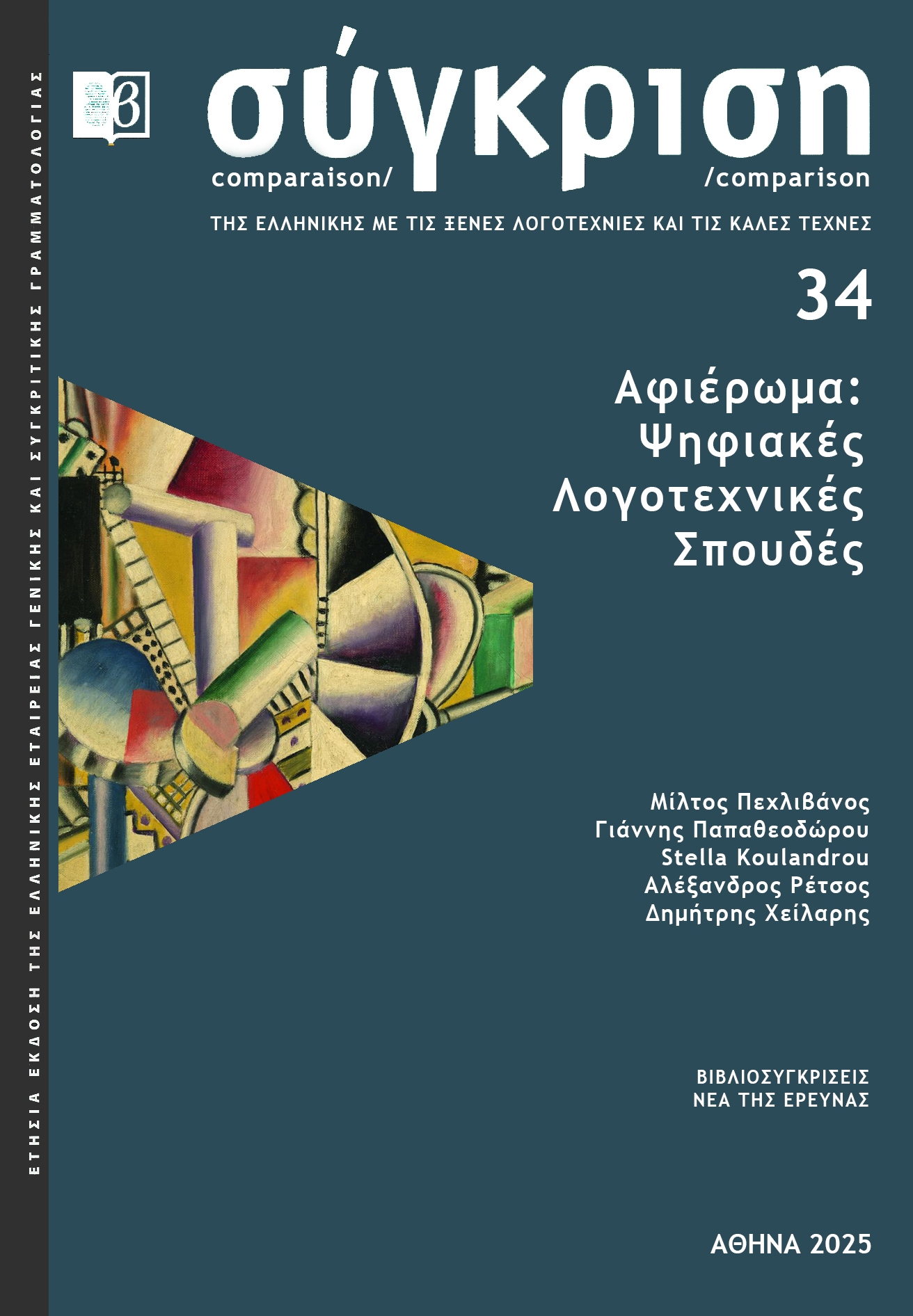
Αρσενίου Ε., Οταμπάσης Χ., & Φελέκης Π. (2026). Το Αρχείο Νίκου Εγγονόπουλου: από την ιδιωτική συλλογή στη δημόσια δημιουργικότητα. Σύγκριση/Comparaison/Comparison, (34), 46–59. ανακτήθηκε από https://ejournals.epublishing.ekt.gr/index.php/sygkrisi/article/view/42590
- Ενότητα
- Άρθρα

Αυτή η εργασία είναι αδειοδοτημένη υπό το CC Αναφορά Δημιουργού – Μη Εμπορική Χρήση – Παρόμοια Διανομή 4.0.
Οι συγγραφείς των άρθρων που δημοσιεύονται στο περιοδικό Σύγκριση διατηρούν τα δικαιώματα πνευματικής ιδιοκτησίας επί των άρθρων τους, δίνοντας στο περιοδικό το δικαίωμα της πρώτης δημοσίευσης. Άρθρα που δημοσιεύονται στο περιοδικό Σύγκριση διατίθενται με άδεια Creative Commons 4.0 και σύμφωνα με την άδεια μπορούν να χρησιμοποιούνται ελεύθερα, με αναφορά στο/στη συγγραφέα και στην πρώτη δημοσίευση για μη κερδοσκοπικούς σκοπούς και με δικαίωμα τροποποίησης μόνον με παρόμοια διανομή (αν αναμείξετε, τροποποιήσετε, ή δημιουργήσετε πάνω στο υλικό, πρέπει να διανείμετε τις δικές σας συνεισφορές υπό την ίδια άδεια όπως και το πρωτότυπο).