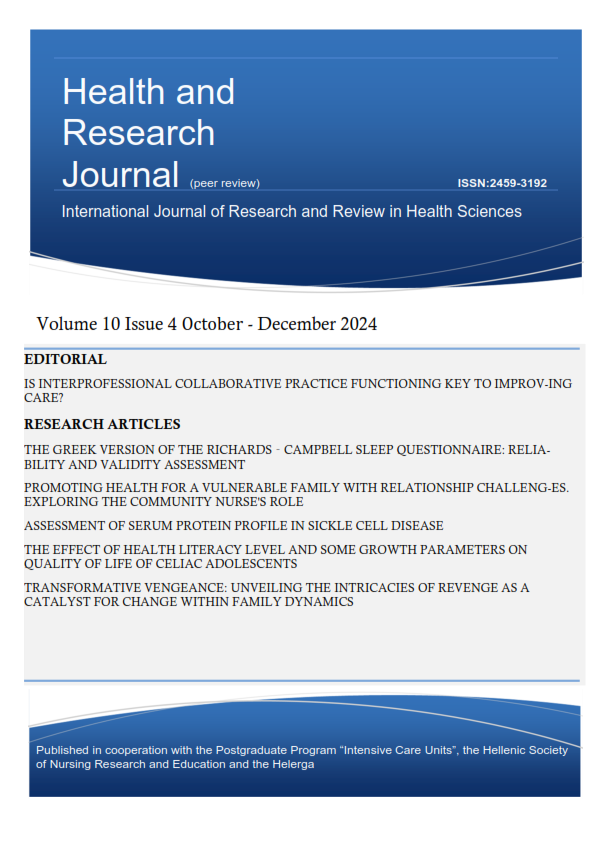
What is Stress in Epilepsy? A Content Analysis and an open letter to the World Health Organization (WHO): Highly Time to Define Stress
Abstract
Aim: Stress is one of the most researched issues in Behavioral Medicine and Health Psychology. The background review illustrated that much peer-reviewed quantitative studies do not define accurately the concept of stress in epilepsy and/or use a different rationale in their definition. This contributes further in major medical and psychological debates and research questions in the last decade of whether stress is ‘epileptogenic’ and ‘seizure triggering’ for epileptic patients.
Material and Method: The present qualitative study applied a content analysis on Chapter 5 of World Health Organization’s (WHO) first and latest global report on epilepsy -from a Health Psychology point of view-, seeking for (i) a universal definition of stress in epilepsy, (ii) what stressors are more related to ‘epileptogenesis’ and ‘seizure triggering’ –if any- and (iii) any proposed stress relief and management strategies to be delivered by psychologists.
Results and Conclusions: Primary and secondary content analysis presented that WHO does not define stress as a single entity, but rather shows an unspecified link with ‘social stigma’ or ‘social stressors’. Moreover, WHO does not show taking leadership in defining stress for research purposes. Lastly, there are some thoughts that although WHO applies the biopsychosocial model in this report, it considers that the ‘psycho’ part of the model concerns entirely the field of ‘psychopathology’.
Article Details
- How to Cite
-
Pilafas, G., Louka, P., & Lyrakos, G. (2023). What is Stress in Epilepsy? A Content Analysis and an open letter to the World Health Organization (WHO): Highly Time to Define Stress. Health & Research Journal, 9(4), 178–185. https://doi.org/10.12681/healthresj.23160
- Section
- Original Articles
Copyright notice:
Authors retain copyright of their work and grant the Health and Research Journal the right of first publication.
License:
Articles are published under the Creative Commons Attribution 4.0 International License (CC BY 4.0). This license permits use, sharing, adaptation, distribution, and reproduction in any medium or format, including for commercial purposes, provided that appropriate credit is given to the author(s) and the original publication in this journal, a link to the license is provided, and any changes are indicated.
Attribution requirement:
Any reuse must include the article citation and DOI (where available), and indicate if changes were made.