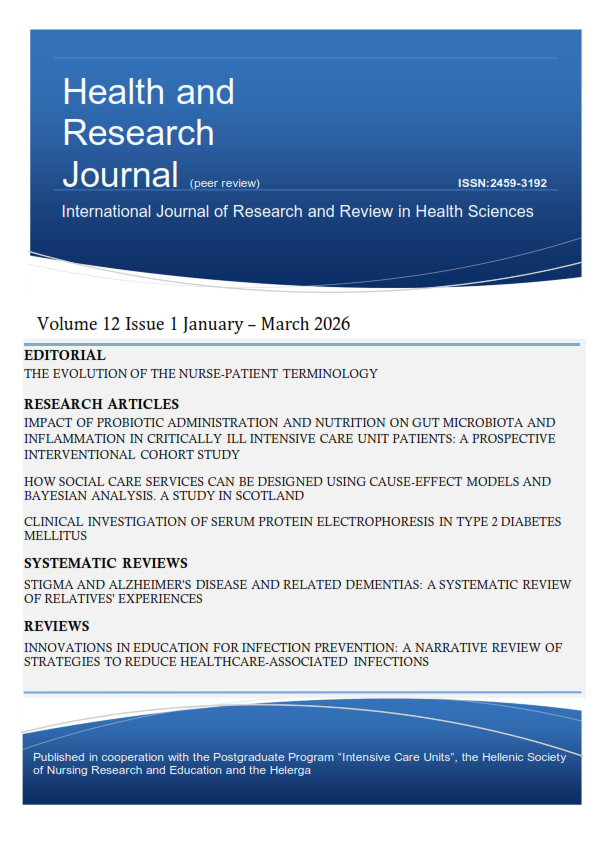
Impact of Probiotic Administration and Nutrition on Gut Microbiota and Inflammation in Critically Ill Intensive Care Unit Patients: A Prospective Interventional Cohort Study
Abstract
Background: The human gut microbiome plays a crucial role in host homeostasis, immune function and the pathophysiology of critical illness. Dysbiosis in the intensive care unit [ICU] is associated with adverse outcomes such as infection, organ dysfunction and prolonged hospitalization. Nutrition and probiotic interventions can restore microbial diversity, modulate inflammation and improve clinical outcomes.
Objective: To investigate the effects of probiotic supplementation and type of nutrition [enteral/mixed/none] on gut microbial diversity, fecal calprotectin levels and clinical outcomes in critically ill ICU patients.
Method and Material: This prospective interventional cohort study included 16 mechanically ventilated ICU patients. The patient admission criteria were age>18 years and mechanical ventilation ≥ three days. The exclusion criteria were immunosuppression, coming from another ICU, history of gastrointestinal, autoimmune or liver disease, terminal illness, HIV and drug use. Demographic data, reason for admission, medical history, medication, duration of mechanical ventilation, sedation, ICU stay and outcome upon discharge were collected for 240 patients. A total of 194 patients were excluded based on the exclusion criteria, stool sample collection was not possible in 17 patients due to critical condition and the relatives of 13 patients refused to provide informed consent. Participants were divided into a probiotic group [n=7] receiving VSL#3 for 10 days and a control group [n=9]. Stool samples were collected on days 1 and 10 for 16S rRNA sequencing and calprotectin measurement and a blood test was performed at the same time. Microbial diversity was assessed by Shannon Index, Richness, and Evenness. Clinical data, infections, SOFA/APACHE II scores, nutritional modality and medication use were recorded. Data were analyzed using IBM© SPSS© v29.
Results: Probiotic administration led to a statistically significant increase in microbial diversity between day 1 and day 10, as evidenced by both the Shannon index [p = 0.007] and Evenness index [p = 0.019], regardless of the type of nutritional support. This restoration of microbial diversity is particularly important in the ICU setting, where critical illness is known to induce dysbiosis through systemic inflammation, antibiotic exposure, and gut barrier dysfunction. By reintroducing beneficial commensal strains, probiotics may promote microbial resilience, restore ecological balance, and reduce the dominance of opportunistic pathogens. Although differences in fecal calprotectin levels, ICU length of stay, and infection rates [particularly ventilator-associated pneumonia and sepsis] did not reach statistical significance, they showed a favorable trend toward the intervention group. Enteral feeding was also associated with a more balanced microbial profile compared to mixed or absent nutrition.
Conclusions: The administration of probiotics led to a significant improvement in microbial diversity [Shannon and Evenness] in critically ill ICU patients, regardless of the nutritional modality. These results support the role of microbiologically targeted interventions in intensive care. Although other parameters such as calprotectin and clinical outcomes did not reach statistical significance, the results emphasize the potential benefit of probiotics in restoring microbial balance in the ICU.
Article Details
- How to Cite
-
Konsta , O., Linardatou, V., Papachatzakis, Y., Karatzanos, E., Philippou, A., Manios, Y., Nanas, S., & Vasileiadis, I. (2026). Impact of Probiotic Administration and Nutrition on Gut Microbiota and Inflammation in Critically Ill Intensive Care Unit Patients: A Prospective Interventional Cohort Study. Health & Research Journal, 12(1), 6–18. https://doi.org/10.12681/healthresj.42827
- Section
- Original Articles
Copyright notice:
Authors retain copyright of their work and grant the Health and Research Journal the right of first publication.
License:
Articles are published under the Creative Commons Attribution 4.0 International License (CC BY 4.0). This license permits use, sharing, adaptation, distribution, and reproduction in any medium or format, including for commercial purposes, provided that appropriate credit is given to the author(s) and the original publication in this journal, a link to the license is provided, and any changes are indicated.
Attribution requirement:
Any reuse must include the article citation and DOI (where available), and indicate if changes were made.